While front teeth are often the focus of cosmetic dentistry, your back teeth—especially molars—play a critical role in your daily life. They are responsible for most of your chewing power and help maintain proper bite alignment.
When a back tooth is missing, it can significantly impact your ability to eat comfortably and may lead to long-term oral health issues.
At Sweet Water Dentistry in Fairhope, AL, dental bridges for back teeth are a reliable and effective solution for restoring strength, function, and stability to your bite. If you’re missing a molar or premolar, this guide will help you understand how a dental bridge can restore your smile and protect your oral health.
Why Back Teeth Are So Important
Back teeth are designed to handle the heavy forces of chewing.
They are essential for:
- Breaking down food efficiently
- Maintaining proper bite alignment
- Supporting jaw function
- Preventing strain on other teeth
When a back tooth is missing, the entire balance of your bite can be affected.
What Happens If You Don’t Replace a Missing Back Tooth?
Many patients delay treatment because the missing tooth isn’t visible—but this can lead to serious issues over time.
Common problems include:
- Difficulty chewing certain foods
- Shifting of neighboring teeth
- Bite misalignment
- Increased wear on remaining teeth
- Jaw pain or discomfort
- Bone loss in the jaw
Replacing a missing back tooth is essential for long-term oral health.
What Is a Dental Bridge for Back Teeth?
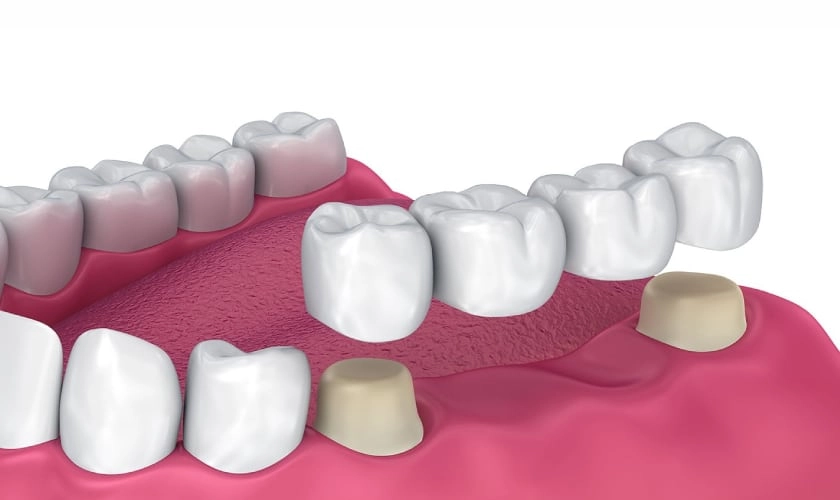
A dental bridge for back teeth is a fixed restoration that replaces one or more missing molars or premolars.
How it works:
- Adjacent teeth are used for support
- A custom artificial tooth fills the gap
- The bridge restores full chewing function
Because back teeth handle more pressure, these bridges are designed for strength and durability.
Best Types of Bridges for Back Teeth
Not all bridge types are ideal for molars due to the force they endure.
1. Traditional Dental Bridge (Most Common)
Why it’s ideal:
- Strong and stable
- Supported by two adjacent teeth
- Handles chewing pressure well
2. Implant-Supported Bridge
Best for:
- Maximum durability
- Long-term solution
- Preventing bone loss
3. Cantilever Bridge (Less Common)
Why it’s rarely used for back teeth:
- Only one support tooth
- Not strong enough for heavy chewing
Benefits of a Dental Bridge for Back Teeth
1. Restores Chewing Ability
You’ll be able to eat a wider variety of foods comfortably again.
2. Prevents Teeth from Shifting
Filling the gap keeps surrounding teeth properly aligned.
3. Protects Remaining Teeth
Reduces excess pressure on other teeth.
4. Improves Bite Balance
Restores even distribution of chewing forces.
5. Fixed and Reliable
Unlike removable options, bridges stay securely in place.
Dental Bridge vs Implant for Back Teeth
This is one of the most common comparisons.
Dental Bridge:
- Faster treatment
- Lower upfront cost
- No surgery
Dental Implant:
- Stronger long-term solution
- Prevents bone loss
- Does not rely on adjacent teeth
What to Expect During the Procedure
The process is similar to other bridge procedures.
Step 1: Consultation
Your dentist evaluates your bite and oral health.
Step 2: Tooth Preparation
Adjacent teeth are reshaped for crowns.
Step 3: Temporary Bridge
Protects the area while your permanent bridge is made.
Step 4: Final Placement
The custom bridge is fitted and cemented.
How Long Do Bridges for Back Teeth Last?
With proper care:
Implant-supported bridges may last even longer.
How to Care for a Back Tooth Bridge
Daily care includes:
- Brushing twice daily
- Flossing under the bridge
- Using a water flosser
Important tip:
Avoid chewing extremely hard foods to prevent damage.
Foods to Be Careful With
After getting your bridge, it’s best to avoid:
- Ice
- Hard candy
- Sticky foods
These can damage the bridge or loosen it over time.
Cost of a Back Tooth Bridge in Fairhope, AL
Typical cost:
Implant-supported bridges may cost more but offer longer durability.
Who Is a Good Candidate?
You may be a good candidate if you:
- Are missing one or more back teeth
- Have healthy supporting teeth
- Want a fixed, stable solution
- Prefer a faster alternative to implants
Why Patients in Fairhope Choose Sweet Water Dentistry
Patients in Fairhope, Daphne, and Mobile choose us because we offer:
- Durable, high-quality restorations
- Personalized treatment plans
- Advanced dental technology
- Comfortable care
FAQ – Dental Bridge for Back Teeth
Can a dental bridge replace a molar?
Yes, bridges are commonly used to replace molars and restore chewing.
Is a bridge strong enough for back teeth?
Yes, especially traditional and implant-supported bridges.
Can I chew normally with a bridge?
Yes, after a short adjustment period.
How long does a back tooth bridge last?
Typically 10–15 years with proper care.
Is an implant better for back teeth?
Implants are more durable long-term, but bridges are a great option as well.
Restore Strength and Function to Your Smile
Missing back teeth can affect more than you realize—but the right solution can restore your ability to eat comfortably and protect your long-term oral health.
At Sweet Water Dentistry in Fairhope, AL, we’re here to help you regain strength, stability, and confidence in your smile.